
Marketing your work is one thing, and marketing your architecture practice (the sum of its parts) is another.
While the experts at Market Your Architecture see a lot of overlap between marketing work and marketing your practice, in this article, we’re specifically focusing on the latter.
We’ll dive deep into crafting a brand that screams you, finding your dream clients, and building a marketing strategy that’s as solid as your designs to make your firm well-known and much-loved.
Key Takeaways:
- Effective marketing is crucial for the success of architecture practices.
- Defining your brand and target audience are essential steps in creating a successful marketing strategy.
- Measuring and adjusting your marketing efforts, as well as building and maintaining relationships with clients, are key to achieving long-term success.
What is Marketing for Architecture Practices?

You’ve got stunning designs ready to rumble.
Now, let’s build a buzz around them!
You know how, when you see one of your favorite brands pop up on social media or on a bus advertisement, your heartbeat quickens a little?
Your interest is sparked, right? You want to know more.
That’s the feeling you’re gunning to instill in your devoted clients with your practice.
From digital showstoppers to old-school charm, pinpointing who you are and what you have to offer with precision is key.
Marketing your architecture practice involves strategically promoting architectural services and building brand awareness.
This encompasses creating a comprehensive marketing plan that targets potential customers through various online and offline channels.
Your visibility depends on marketing your practice well.
Why is Marketing Important for Architecture Practices?
If you want to enhance brand awareness, marketing is the way.
This is an opportunity to directly influence your client relationships and revenue generation.
Effective marketing strategies serve as the backbone of architectural firms, providing them with tools to amplify their visibility in a competitive marketplace.
By leveraging these strategies, practices can demonstrate their unique design philosophies and project successes, fostering genuine connections with prospective clients.
Ultimately, this connection leads to better client retention and a broader referral network.
Other benefits include:
- Improved Visibility: Implementing a robust online presence through social media, engaging content, and targeted advertising can significantly raise awareness.
- Stronger Client Relationships: Personalized communication and outreach efforts can cultivate trust and long-lasting partnerships.
- Increased Revenue: Engaging marketing techniques not only attract new clients but also encourage repeat business.
Branding plays a pivotal role in establishing this trust and credibility, as a well-crafted brand narrative helps differentiate an architecture firm from its competitors, fostering loyalty among clients.
All in all, marketing allows you to build a brand that resonates with your audience.
From creating engaging marketing content to exploring another form of marketing—like social media or podcasts—you’ll find that architect marketing is all about using different strategies to stay relevant.
What we’ve seen over the years is that many architecture firms have learned that marketing and business development is not just a luxury.
Instead, it’s a necessity that can help you stay on time with time and finances while ensuring increased timesheet adoption!
What Are Some Creative Ways to Market My Practice?
When it comes to marketing your architecture practice, think outside the box as much as you can.
I mean, don’t do anything crazy.
But those who foray off the beaten track are often the ones creating memorable content online and in their communities.
You might consider embracing public speaking, which is not only a fantastic way to showcase your expertise but also a great way to get clients intrigued.
Many architecture firms often overlook this marketing activity, but those who do it right can see a significant return on investment.
Combine that with some savvy digital strategy and you’ve got yourself a recipe for architectural success!
Defining Your Architecture Practice’s Brand
Don’t let your architecture firm get lost in the crowd.
Your brand is your signature – and the more it stand out, the easier it is to spot.
Have you ever scrolled through architectural brand pages on Instagram or Facebook?
Surprisingly enough, so many of them look quite similar.
But we advise that you don’t fall into the trap of emulating other, more successful firms.
How do you catch someone’s eye and tell the story of your brand in one fell swoop?
This is a promise to your clients.
It’s about more than just a logo. You want to get your soul on paper.
Crafting a brand identity that screams you helps you attract clients who get your vibe.

What is Your Unique Selling Proposition?
Your Unique Selling Proposition (USP) is the brushstroke that makes the creativity of your firm stand out.
It’s your secret ingredient, the ‘wow’ factor that turns browsers into believers.
Discover your USP, shout it from the metaphorical rooftops, and your client base is sure to grow.
To identify and articulate a USP, architects should begin by analyzing their market positioning as well as understanding the specific needs of their target audience.
This involves conducting thorough research to uncover what clients in the architecture sector prioritize, whether it’s sustainability, innovative design, or exceptional customer service.
Once these elements are identified, architects can tailor their propositions accordingly.
- For instance, an architecture firm that emphasizes eco-friendly designs might present its USP as “Leading the way in sustainable architecture for conscious living.”
- Another effective example is a firm that focuses on urban revitalization, promoting itself as “Transforming communities through innovative urban solutions,” which directly speaks to community improvement and social impact.
By clearly identifying these factors, architects can then apply their unique insights to marketing strategies, making sure that their communications highlight this distinctive edge.
A well-articulated USP not only attracts potential clients but also establishes a lasting connection, fostering client loyalty and increasing referrals.
How to Create a Memorable Brand Identity
Your brand is your firm’s fingerprint, which can leave an unforgettable mark if wielded right.
Blend style, substance, and soul to create a brand identity that is authentically yours.
Every touchpoint, from logo to client chat, should be seized as a chance to tell your practice’s story.
Visual elements play a pivotal role in framing perceptions, making them crucial for shaping a practice’s identity.
For instance, logos, color schemes, and typography are not mere decorative aspects.
You can think of them as the foundational elements that communicate a brand’s personality and ethos.
A well-designed logo can instantly evoke emotions, while a consistent color palette enhances recognition across various platforms.
That consistency is what makes clients and potential clients go, “Oh, yeah. I know them.”
- Logos: They act as the face of your brand, making it instantly identifiable.
- Color Schemes: Colors can influence mood and decision-making, creating a deeper connection with clients.
- Typography: The choice of fonts can reflect professionalism, creativity, or innovation, guiding audience perceptions.
When clients encounter a unified visual identity, it builds trust and familiarity, thus enhancing their overall experience with your architecture practice.
Identifying Your Target Audience
Know your audience, and you’ll win their hearts!
That’s a pretty good motto by MYA’s standards.
Understanding your audience’s desires, dreams, and dilemmas is the secret to crafting irresistible marketing – and that’s a secret worth finding.
With laser-sharp focus and a hint of data magic, you’ll create marketing that resonates – truly resonates.
So, start with who you’re engaging – and think, how do I connect?
Understanding marketing in the business of architecture really boils down to how much you understand your clients.
It’s essential to ask yourself some specific questions:
Who are these clients that may need your services?
After all, you don’t want to market your firm’s brand to a crowd that thinks a blueprint is just a fancy napkin.
To get it right, consider another form of marketing, such as updating your website and blog.
On our blog, for example, we make it easy to see the latest updates and posts. Plus, we keep the search bar at the top of the screen, so visitors can easily find the information they’re seeking:
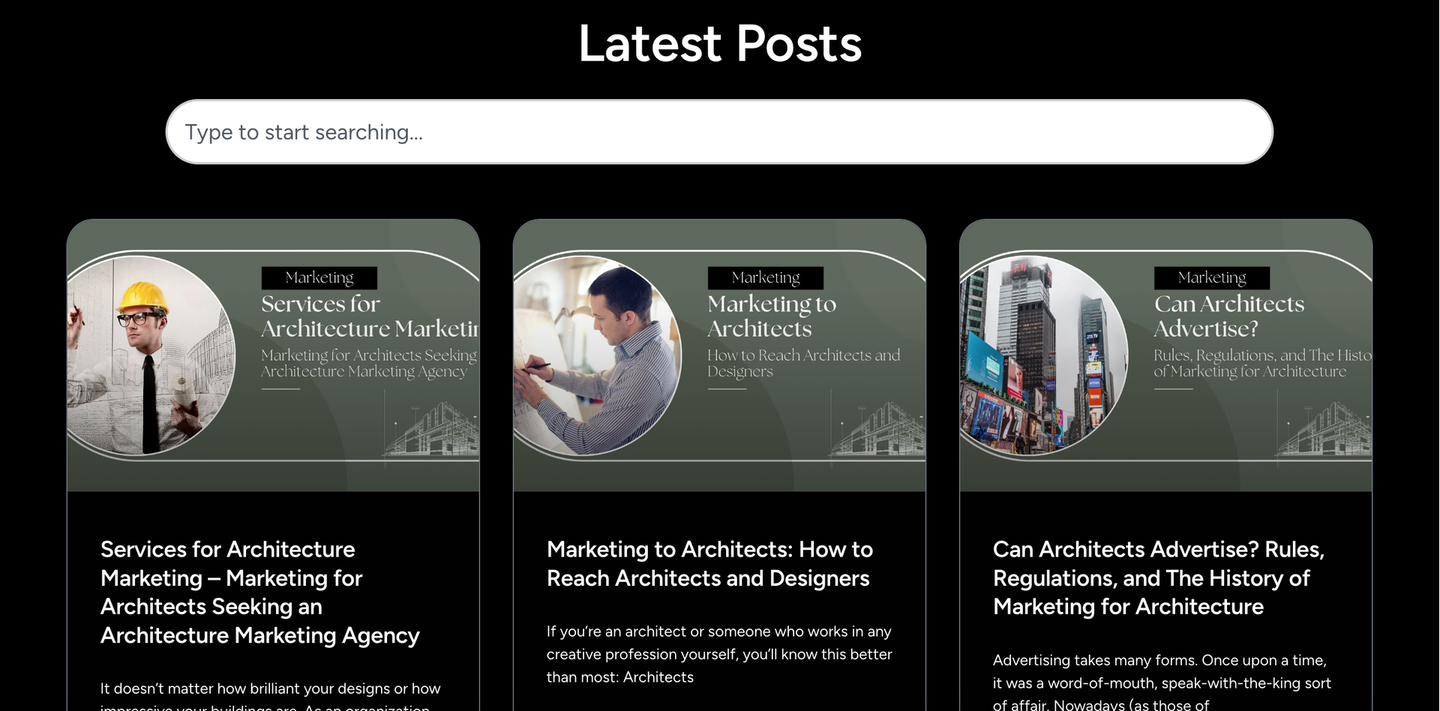
It’s an opportunity to showcase your work and can dramatically increase the number of leads you generate.
Partner with lead generation companies to capture visitor information and transform your efforts from passive to active.
And be sure to get on board with digital, so you can generate accurate invoices and receive payments online like a pro!
Who is Your Ideal Client?
Your ideal client is the person or organization that aligns perfectly with your architecture practice’s values, services, and expertise.
Identifying the ideal client goes beyond merely considering who might benefit from your services.
It involves a comprehensive understanding of their demographics, psychographics, and unique needs.
By examining key factors such as age, income level, location, and profession, one can formulate a profile that encapsulates the characteristics of this client.
Getting into psychographics—like interests, values, and lifestyle choices—provides deeper insights into their motivations and preferences.
- Demographics: Consider age, gender, and income level.
- Psychographics: Look at values, interests, and lifestyle.
- Specific Needs: Identify the unique problems your services can solve for them.
Aligning marketing strategies with these attributes enhances outreach and fosters stronger connections, ultimately leading to more successful project outcomes.

How to Reach and Engage Your Target Audience
Catching your audience’s eye is one thing.
But the next step is to engage them and keep their attention.
That’s why social media isn’t just about posting pretty pictures.
It’s about crafting a conversation that keeps them coming back for more.
Juicey, gripping content that really highlights your firms values, strengths, and unique insights is your key to unlocking hearts and minds.
Share stories, thoughts, and inspiration that make your firm the go-to architect in their world.
You want to build a digital community that craves your expertise.
And you can maximize your outreach efforts by creating compelling, valuable content that resonates with both current and potential clients.
This content can take various forms, including blog posts, infographics, and videos, which not only showcase projects but also share insights into architectural trends and sustainable practices.
Additionally, using platforms like Instagram and Pinterest enables firms to display their portfolio visually, while engaging clients through interactive posts such as polls and Q&A sessions.
You can see how we’ve engaged our audience online with a combination of reels and posts that give insight into the work we do and create a more personal experience for our audience:

We think of our social media profiles as chances to connect with our audience – allowing us to share easy-to-digest marketing tips and tricks while also allowing them to get to know the people behind the work.
Perhaps you could benefit from the bite-size, digestible, and dynamic posts that social media can offer, just as we do at MYA!
In addition to these strategies, creating targeted email campaigns allows firms to maintain ongoing communication with their audience, providing them with updates, newsletters, and exclusive offers that foster relationships.
By getting on board with marketing tools on social media platforms like LinkedIn, you can turn the heads of those ready to hire an architect.
Developing a Marketing Strategy for Your Architecture Practice
A solid marketing strategy is not something to skimp on if you want your practice to be well known.
We advise that you set clear goals, choose your weapons wisely, and track your progress like a hawk.
You really want to create a battle plan that aligns with your vision, and that’s how you’ll build a marketing machine that delivers results.

Setting Goals and Objectives
Set the course with clear, actionable targets that keep you on track.
Don’t just aim high.
Aim SMART.
SMART is an acronym that keeps a few crucial moves front of mind, and it’s one we at MYA stand by.
By establishing goals that are specific, measurable, achievable, relevant, and time-bound (SMART), businesses can create a structured and realistic roadmap for their marketing strategies.
The first step involves pinpointing objectives that align directly with the firm’s overall vision.
For instance, a practice might aim to increase client engagement by 25% over the next six months.
This requires evaluating current outreach methods and determining what needs adjustment.
- Specific: Goals should clearly define what is to be accomplished.
- Measurable: It’s essential to track progress and define success metrics.
- Achievable: Goals must be attainable considering available resources and constraints.
- Relevant: Each goal should support broader business objectives, ensuring alignment.
- Time-bound: A deadline provides urgency and keeps efforts focused.
Establishing SMART goals not only motivates teams but also ensures that all marketing initiatives are targeted and effective, ultimately driving growth and enhancing brand positioning in a competitive landscape.
Choosing the Right Marketing Channels
You’ll also need to hit the right note with the right channels.
Choose channels that resonate with your audience and amplify your firm’s uniqueness.
Don’t just broadcast. Create a conversation.
In today’s fast-paced digital landscape, practitioners must navigate a plethora of options to ensure they engage effectively.
And this means understanding which platforms resonate most with the audience, whether it be through captivating visuals on social media, personalized outreach via email marketing, or establishing a robust online presence through SEO strategies.
- Social media channels offer a space to showcase stunning designs, share project updates, and engage directly with potential clients.
- Email marketing serves as a powerful tool to keep past and prospective clients informed, offering newsletters and exclusive content that builds rapport.
- SEO strategies ensure that when people search for architectural services online, your practice is easily discoverable, driving organic traffic to your website.
To select the most appropriate channels, one must consider the audience’s preferences, aligning them with their marketing goals to create a tailored approach that fosters genuine connections.

Creating Compelling Content and Visuals
Storytelling with visuals is the way to spin narratives from the golden thread of your projects and your practice.
Create content that pulls people in, makes them feel, and inspires them.
Your images should be as beautiful as your designs.
You could even share some of your designs, in drawing form or otherwise!
Architects must prioritize the presentation of their projects through high-quality visuals and carefully crafted narratives.
These elements illustrate design concepts and convey the innovation and value inherent in each project.
By employing strategies such as:
- Using professional photography and videography to showcase completed buildings,
- Incorporating detailed project descriptions that highlight unique features and challenges,
- Engaging clients on social media platforms with visually appealing posts,
- Creating case studies that outline the design process and client testimonials,
firms can effectively communicate their architectural services while aligning with broader marketing objectives.
All in all, a cohesive content strategy that integrates rich visuals and informative text will resonate more deeply with audiences, leading to increased interest and client inquiries.
Harnessing the Power of Virtual Reality
In the architecture world – which is where many firms are busy focusing on design, of course – there’s one surefire way to elevate your marketing efforts.
Enter virtual reality, the sleek and snazzy tool that transforms your architectural marketing from just okay to absolutely jaw-dropping and mesmerizing.
Yes, you’ll be in the elite few jumping on this technology early on for its marketing potential.
But isn’t that the point?
If you can do it, go for it!
Your elevator pitch can actually be an immersive experience where potential clients can stroll through their future dream home before they’ve even signed a contract.
With a few digital marketing strategies up your sleeve, your firm can become a modern marketing organization.
Measuring the Success of Your Marketing Efforts
Measuring the success of your marketing efforts is crucial for understanding the effectiveness of your architecture practice’s marketing strategies and making informed adjustments.
Key Metrics to Track
Key metrics to track in architecture marketing include website traffic, conversion rates, and lead generation, which provide valuable insights into the effectiveness of your marketing campaigns.
These metrics serve as crucial indicators that help architects understand their audience’s engagement and preferences.
For instance, website traffic indicates how many visitors are exploring your firm’s offerings, while analyzing traffic sources can reveal which channels are most effective.
Conversion rates shed light on the percentage of visitors taking desired actions, such as filling out a contact form or signing up for a newsletter.
Monitoring lead generation efforts helps assess the quality and quantity of potential clients attracted by various marketing strategies, allowing for informed adjustments to campaigns.
- Website Traffic: Analyze user behavior and demographics.
- Conversion Rates: Identify areas for improvement on landing pages.
- Lead Generation: Evaluate the effectiveness of different outreach methods.
By continuously interpreting these metrics, architecture firms can make informed decisions that align their marketing efforts with overall business objectives, ultimately leading to sustained growth and success.
Here’s a guide we at MYA think is great if you need some help figuring out which metrics to track.

Adjusting Your Strategy Based on Results
Adaptation is also essential.
Marketing is a living, breathing thing.
Track your wins, learn from your losses, and pivot in response.
Your strategy should be as dynamic as your designs.
Let the data be your guide.
When you take a closer look at performance metrics and customer feedback, it becomes clear how these insights can drive your marketing strategy forward.
By systematically reviewing data, such as engagement rates and conversion statistics, you can pinpoint what resonates with your audience and what doesn’t.
- Understanding audience preferences can lead to more targeted campaigns.
- Incorporating feedback allows for intuitive adjustments, making your message more relevant.
After gathering the data, the next step involves analyzing the results to identify trends and areas for improvement.
Engaging with clients through surveys or comment sections can also provide invaluable qualitative insights.
Overall, this continuous cycle of refinement enables your practice to not only respond to market changes effectively but also stay ahead of the curve, ensuring that your architectural vision resonates with potential clients.
Building and Maintaining Relationships with Clients
Client relationships are what nourish every architecture practice, allowing it to grow and thrive.
And in turn, you need to nurture your clients.
Happy clients equal repeat business and a floodgate of referrals.
Build trust, overdeliver on promises, and invest in lifelong partnerships.

Effective Communication and Follow-Up
Communication is the cornerstone of every great relationship.
Talk openly, listen intently, and follow up – just the same as you’d do in a powerful friendship.
Keep the lines open.
By maintaining a clear and open dialogue, the practice not only shows that it values the clients’ input and concerns but also fosters a collaborative environment that leads to better project outcomes.
What’s more, implementing a structured approach can significantly enhance the overall experience for clients, making them feel appreciated and engaged.
Timely responses to inquiries and proactive updates on project progress can minimize misunderstandings and build trust.
Consistent communication throughout the project timeline ensures that clients remain informed and satisfied, which is vital for maintaining lasting partnerships and improving client retention rates.
Be sure to:
- Establish regular check-ins
- Use digital tools for updates
- Encourage feedback at every stage
Use Referrals and Word-of-Mouth Marketing
Word-of-mouth is a form of magic, in our experience.
Referrals and client testimonials can be amazing for your practice’s growth.
This is a way to turn happy clients into your biggest cheerleaders.
By using the strength of satisfied clients, architecture firms can build a foundation for sustainable growth.
One effective strategy to encourage referrals is to cultivate genuine relationships with clients, ensuring that they feel valued and heard throughout the design process.
Offering incentives for referrals can motivate clients to recommend services, such as discounts on future projects or special services.
- Create memorable experiences: Design experiences that resonate with clients, such as personalized consultations or unique design touches that exceed their expectations.
- Request feedback: After project completion, solicit feedback to show clients their opinions matter and to identify areas for improvement.
- Showcase results: Regularly share completed projects on social media and newsletters to remind clients of the value you provide.
When clients share their positive experiences within their networks, it naturally prompts new inquiries, forming a robust cycle of referrals that supports the growth of the firm.
Conclusion – Marketing Strategies for Architects and Their Practice
In the field of architecture, mastering marketing strategies is as essential as understanding building information modeling.
Many architects find themselves grappling with digital marketing concepts, but fear not!
You can create your marketing plan with a sprinkle of social media marketing for architects and a dash of content marketing.
It’s all about optimizing your email list and crafting that perfect elevator pitch—because let’s face it, no one wants to be the architect who only cold calls in desperation.
In this modern age, new technologies like virtual reality can transform your architecture marketing plan into a seamless experience for potential clients.
Think of it as an architectural masterpiece—only instead of bricks and mortar, you’re building a solid business development strategy.
And remember, search engine optimization isn’t just a buzzword.
In fact, it’s your golden ticket to lead generation services.
So, embrace these marketing concepts for architecture firms, and enjoy the journey!
And if you need support at any time, we at Market Your Architecture are here to help.
Check out our offerings to see how we can help your practice thrive.
Frequently Asked Questions
What is marketing architecture practice?
Marketing architecture practice refers to the strategies and techniques used to promote and advertise an architecture firm’s services and projects.
It involves showcasing the firm’s unique brand, expertise, and design approach to attract potential clients and build a strong reputation in the industry.
Why is marketing important for architecture practice?
Marketing plays a crucial role in the success of an architecture practice. It helps in creating brand awareness, generating leads, and converting them into clients.
Additionally, it allows firms to differentiate themselves from competitors and showcase their unique value proposition.
What are the benefits of marketing architecture practice?
Marketing architecture practice offers several benefits, including increased visibility, credibility, and brand recognition.
It also helps in creating a strong client base, attracting top talent, and staying competitive in the market.
How can I market my architecture practice effectively?
To market your architecture practice effectively, it is essential to have a well-defined marketing strategy in place.
This can include creating a strong online presence, networking with industry professionals, showcasing your portfolio, and utilizing targeted marketing tactics.
What are some effective marketing tactics for architecture practice?
Some effective marketing tactics for architecture practice include creating a visually appealing website, using social media platforms, attending industry events, and partnering with complementary businesses.
It is also crucial to have a clear message and consistent branding across all marketing channels.
How can Market Your Architecture help with marketing my practice?
Market Your Architecture offers valuable resources and services specifically tailored for architects to market their practice effectively.
From branding and website design to social media management and lead generation, MYA provides the necessary tools to help architects showcase their work and attract potential clients.