
If you’d like to pick up the playbook that will enable you to take your marketing up a notch, then the 4 Ps is the one you’ve been looking for.
The 4 Ps are a tried-and-tested approach to marketing.
And while the 4 Ps were not formed with architecture in mind, at Market Your Architecture, we’ve got some ideas and experience using them – which is why we know how to take them, remix them, and make them work in application.
That’s what we plan to share in this article today!
As a quick intro, the 4 Ps are (drum roll, please):
- Product
- Price
- Place
- Promotion
If you root these four Ps in your mind, you can also wield them like a pro – helping you build design packages that will help you find perfect client matches.
Key Takeaways:
- The 4 Ps of marketing (product, price, place, and promotion) are essential elements for architects to consider when developing their marketing strategies.
- For architecture marketing, the 4 Ps involve creating unique design services, determining competitive fees, targeting the right market and location, and using effective promotional strategies.
- Successful architecture marketing using the 4 Ps includes offering sustainable design services, having transparent fee structures, targeting local businesses and communities, and using social media and networking events.
What Are the 4 Ps of Marketing?
As mentioned, the 4 Ps of marketing, also known as the “marketing mix,” encompass Product, Price, Place, and Promotion.
Just know that these are the essential elements that help businesses effectively market their products and services to their target audiences by shaping the customer journey from awareness to purchase.
We’re giving them each a bit of a spin to make their applications to architecture that much more useful to the architecture industry.
We at MYA live by these 4 Ps – so much so that you may have noticed we have them front and center on our website:
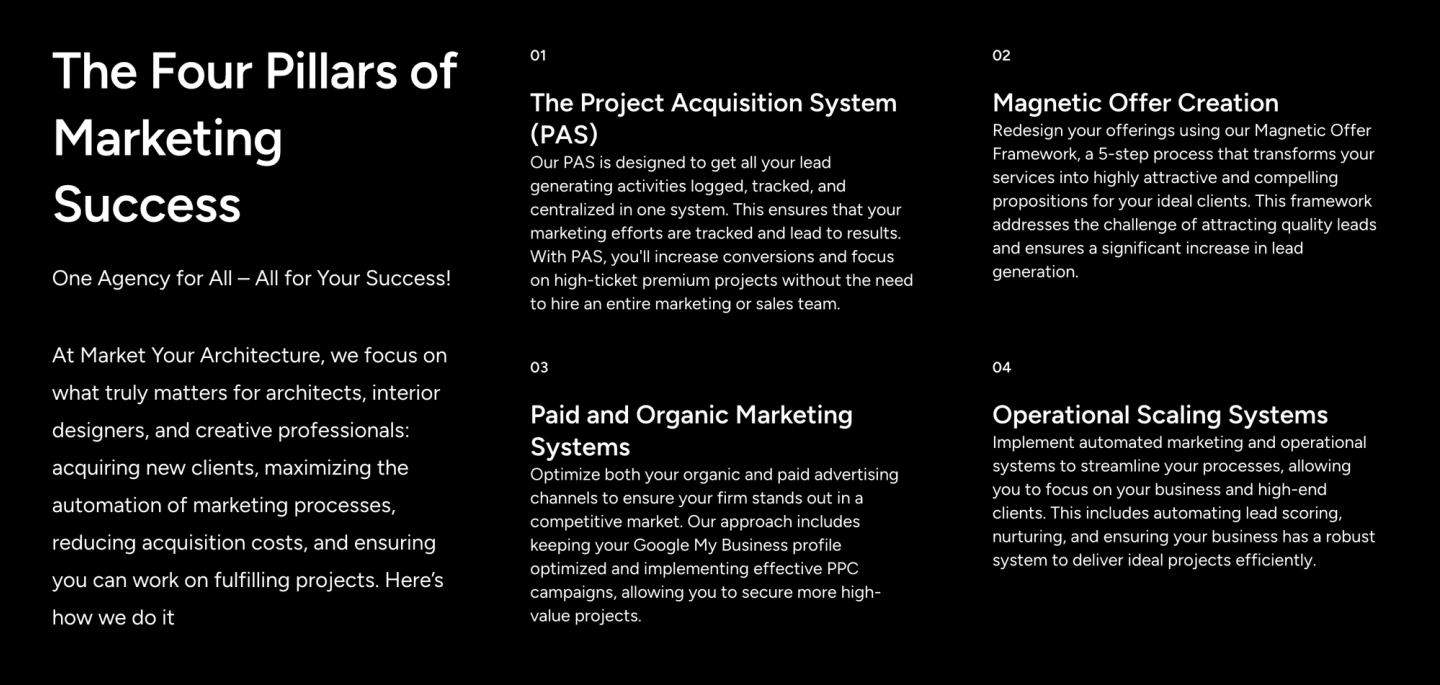
Product
The first of the 4 Ps – front and center – is Product.
While we don’t make products in the traditional sense, think of this as referring to what an architecture firm offers a client.
What are you providing?
Perhaps its design services or the quality of your architectural projects.
In the field of architecture, the importance of delivering high-quality products and services cannot be overstated.
Keep in mind that quality isn’t just a buzzword – with nearly three quarters of clients valuing product quality when it comes to brand loyalty.
Delivering knockout designs and flawless execution is a way to build a fortress of trust with clients.
Design, as a core component of your product, is not just about aesthetics but also about functionality and meeting the specific needs of the clients.
So, in short, here’s our advice: tailor, tailor, tailor.
A well-designed architectural project enhances the overall experience for its users in unique, thrilling ways – while addressing practical requirements.

Price
Pricing your architectural genius isn’t just about slapping a number on a page.
It’s about understanding your client’s wallet and the project’s heartbeat.
One crucial strategy for setting prices is to carefully assess the perceived value of your services in the eyes of your clients.
Understanding what makes your services unique and valuable to your target audience allows you to price your offerings accordingly.
Market demand is another key factor to consider.
By staying attuned to the current trends and demands in the architecture industry, you can adjust your pricing strategies to meet the needs of the market.

Place
Place is where the magic happens.
If you pick the right neighborhoods and demographics, you set things up so that your client base can truly blossom.
Know your competition, get to know the local terrain, and do what you can to make your firm the go-to choice for anyone trying to realize their design dreams.
When you align your services with the needs and preferences of the local market, you increase the chances of acquiring new clients and building lasting relationships.
By establishing a strong presence in the right locations, you can position your firm as a trusted and sought-after provider in the architectural industry.
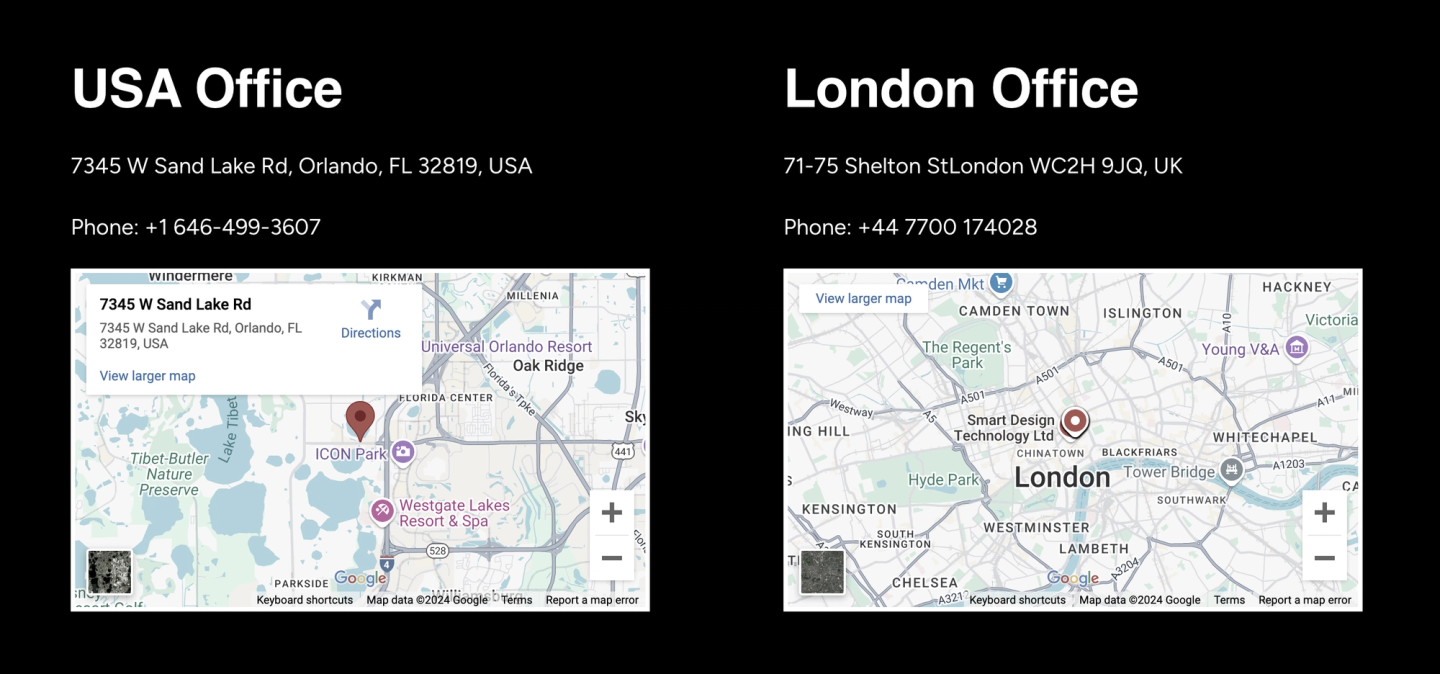
And don’t forget to make your location clear to anyone seeking it out – like we do on our own website:
Promotion
Promotion is the way to entice – and social media is a pretty great stage on which to do so.
Share your designs in their full glory on Instagram, LinkedIn, and Twitter.
Build a following.
For assistance, you can check out some of our blog posts – such as this one, all about marketing using Instagram.
Avoid just posting pretty pictures. What’ll set you apart is telling a story that makes people want to be part of your world.
Attending networking events like industry conferences, trade shows, and workshops can also allow you to connect with professionals and potential clients face-to-face.
When promoting, focus on fostering meaningful relationships and expanding your professional network at the same time.
How Do the 4 Ps Apply to Architecture Marketing?
Applying the 4 Ps to architecture marketing involves tailoring each element of the marketing mix—Product, Price, Place, and Promotion—to the unique needs and strengths of an architecture firm.
The goal is to ensure that your firm stands out in a competitive market through effective differentiation and promotional strategies.
And you can take this further on your own by customizing and creating chaos (in the best kind of way).
Tailor the 4 Ps to your firm’s DNA.
Stand out from the crowd, shout about your strengths, and let your brilliance shine.
Product: Design Services and Specializations
Your designs are your product, your passion, your pride.
They’re the heart and soul of your business.
You provide a wide range of design services to cater to various needs of your clients.
So, focus on what makes you unique, and let your work do the talking.
What sort of needs are you trying to meet for your clients?
These could be for residential, commercial, or institutional projects, interior design, landscape architecture, urban planning, sustainable design solutions, and more.
Specializations in heritage conservation, adaptive reuse, healthcare facilities, or hospitality design can further distinguish a firm in a competitive market.
To highlight the quality of these services, firms can showcase their past projects, client testimonials, awards and recognitions received, innovative design approaches, sustainability strategies, and the expertise of their team members.
Plus, emphasizing the use of advanced technology, such as Building Information Modeling (BIM) or Virtual Reality (VR) in the design process, can attract clients looking for cutting-edge solutions.
Price: Determining Fees and Budgets
Pricing your architectural brilliance is a delicate dance.
Balance value with budget, and transparency with profitability. Know your worth, but don’t price yourself out of the game.
Value for money – whatever that means to your client – is what will get people talking.
Do your homework on the competition, but stay true to your brand.
It’s a tightrope walk, but the view from the top is worth it.
By benchmarking against similar services, architects can ensure they are offering fair rates while also differentiating themselves based on their unique value propositions.
It’s also essential to regularly review and adjust pricing models in response to changing market conditions and evolving client expectations.
Open communication with clients about pricing factors and options helps to build trust and transparency, fostering strong relationships based on shared understanding.

Place: Targeting the Right Market and Location
Find your people, and your people will find you.
That phrase may sound trite, but we at MYA really stand by that motto.
Choose your spots wisely, and you set your business up to flourish.
And keep in mind that identifying suitable markets and locations involves thorough market research and understanding the local landscape.
By analyzing demographics, economic trends, and competition, architects can pinpoint areas with high demand for their expertise.
- Networking with local businesses, real estate agents, and community organizations can provide valuable insights into emerging opportunities.
- Attending industry events and staying updated on urban development projects can also help architects discover potential markets.
Promotion: Strategies for Reaching Potential Clients
Promotion is about telling your story in a way that makes people say, “Wow, I need them for the job.”
Be bold, be creative, and be unforgettable.
Okay, you don’t have to get too crazy or inventive – but you do need to turn casual browsers into raving fans, and that requires a good hook.
One key promotional strategy widely used in architecture marketing is content marketing.
By creating and sharing valuable and engaging content, such as blog posts, case studies, and videos, your firm can establish expertise and build credibility in the industry.
This not only helps in attracting potential clients but also improves search engine rankings, driving organic traffic to your website.

What Are Some Examples of Successful Architecture Marketing Using the 4 Ps?
Master the 4 Ps, and you stand the best chance of making your firm the talk of the town.
To do that, you’ll need to make a compelling case for why your firm is the perfect option for your client base.
Combine wonderful designs, smart pricing, strategic positioning, and a marketing know-how – and that’s your recipe for success.

Product: Unique and Sustainable Design Services
One example of successful architecture marketing is offering unique and sustainable design services that appeal to environmentally conscious clients.
By emphasizing innovative and eco-friendly concepts in their projects, architecture firms can set themselves apart in a competitive market.
Clients who prioritize sustainability are increasingly seeking out architects who share their values and can provide creative solutions that align with their environmental goals.
This commitment to unique and sustainable designs can help attract a specific client base.
Plus, it also contributes to a positive reputation within the industry, further enhancing the firm’s visibility and credibility.
Price: Competitive and Transparent Fee Structures
Transparency is the new black, in our humble opinion, and clients love honesty like never before.
The digital age comes with its hazards, after all – but it’s also made folks become necessarily discerning.
Show them you’re not playing games with your pricing, and they’ll trust you more.
This also helps you set realistic expectations from the outset.
When clients know what to expect in terms of costs, a sense of trust and reliability in your firm is sure to follow.
When pricing is clear and competitive, it helps attract potential clients who are looking for value and quality in architectural services.
That’s statistically true in this study, with nearly 95% of people reporting they trust a brand or organization more when they’re upfront about costs.
This can open up new project opportunities and enhance the firm’s reputation in the industry.

Place: Targeting Local Businesses and Communities
Think global, act local.
Another aphorism we at MYA would gladly write home about!
Local businesses and communities really are your bread and butter – and that’s often missed.
Focus on your backyard, and you’ll build a loyal base of clients from which to snowball your business on a grander scale.
Get involved, show you care, and they’ll remember you when it’s time to build.
By focusing on local markets, architecture firms have the opportunity to build strong relationships with nearby businesses and residents.
These connections can lead to valuable word-of-mouth referrals and a positive reputation within the community.
Engaging with local businesses through networking events, collaborations, and sponsorships can not only provide exposure but also showcase a firm’s expertise in the industry.
Understanding the unique needs and preferences of the local market allows architecture firms to tailor their services and designs to better suit the target audience.

Promotion: Using Social Media and Networking Events
Social media is your new business card.
So, share your world with the world.
Show off your projects, drop some design knowledge, and engage with your audience like a pro.
On the other hand, networking events offer a more personal touch, allowing architects to connect face-to-face with industry professionals, clients, and collaborators.
By actively participating in conferences, workshops, and local meetups, firms can establish credibility, exchange ideas, and foster meaningful partnerships that can lead to new business opportunities.
What Are the Challenges of Implementing the 4 Ps in Architecture Marketing?
Architects and architecture firms face unique challenges when it comes to implementing the 4 Ps of marketing in their industry.
While other businesses may find it easy to promote a tangible product, architects attract clients based on their portfolio and project-based marketing for architecture firms.
And let’s be honest – it’s not always easy to showcase the added value that an architectural practice can bring to a project.
Practice clarity is crucial, as many architects still struggle to communicate to prospective clients what differentiates our practice from our competition.
Ultimately, it’s up to us to ensure that our architectural firm is best suited to meet the needs of our clients.
Architecture companies around the world rely on the 4 Ps of marketing to get more clients.
But the some firms can stand to do a better job at fitting the marketing to the unique needs of architects.
It’s not enough to just showcase our projects – we need to show prospective clients how our architectural practice adds value and sets us apart from the competition.

Balancing Creativity and Business with the 4 Ps of Marketing
Architects are artists with spreadsheets.
It’s a delicate dance between dreaming up masterpieces and making sure the lights stay on.
The 4 Ps are your compass.
Creativity is the fuel that ignites your designs, while the 4 Ps keep your business grounded.
Turning inspiration into income is possible without sacrificing your artistic soul.
And as an architectural firm, you probably feel strongly that your firm can stand out by balancing creativity and business with the 4Ps of marketing.
Creating a carefully crafted message about how your firm is different and best able to help worldwide architects is key.
Why?
Because one of the most disheartening things to hear when conducting a debrief for a lost opportunity is that your help wasn’t clear enough.
That’s a big risk in the competitive world of architecture.
If the potential client can’t find what sets you apart, it doesn’t matter how talented your team is.
You need to differentiate your firm through a strategic approach that works for architects.
Product positioning is where it’s at.

Adapting to Changing Market Trends
The architecture world is a tidal pool of trends.
What was hot yesterday might be yesterday’s news tomorrow.
Firms that cling to outdated styles risk getting swept away.
That’s why we feel strongly that your architectural firm needs to be a surfboard, not a sandcastle.
The last few firms could have done the work, but could have done the work with the same flair and foresight?
We doubt it.
Your firm, through a carefully crafted strategy, can ride these waves and emerge stronger.
It’s quite possible that the message isn’t just about building structures, but also about building trust.
Ask an architect how to differentiate in a crowded market, and they’ll talk about design.
But the real differentiator is understanding the investment cycle of your clients and how to clearly communicate to clients what differentiates you.
They might or might not figure it out on their own, but it’s a big risk to leave your firm’s future in their deciphering.
You want to be clear and forthcoming.
On top of that, staying updated with the latest developments allows firms to anticipate shifts in client preferences, technological advancements, and design trends.
By embracing innovation and flexibility, they can tailor their services to meet the evolving needs of their clients.
This proactive approach not only ensures client satisfaction but also positions the firm as a forward-thinking industry leader.
Through continuous market research and trend analysis, architects can refine their strategies, enhance their offerings, and maintain a competitive edge in a dynamic marketplace.

Differentiating from Competitors
How often do clients feel that any of the last five firms they’ve talked to could have done the work?
Best suited for the project, sure, but what about that thing that makes them feel like they just click with an architect?
A carefully crafted position statement is so valuable for this reason.
As an architect, you should aim to identify and name your process right off the bat.
Are you an address professionals and portfolio builder, or a generalist marketer? Are you a builder or a building materials expert?
Shape your services around what clients need, not solely what you want to do (though your passion and care remains important).
In the end, better clients mean better projects.
Selection committee members aren’t looking for another cookie-cutter firm.
They want someone who can find solutions, not just problems.
So, be glad to be different.
People ask, “How can I stand out?”
And indeed, differentiating from competitors is a significant challenge for many architecture firms striving to establish a unique market position.
Still, the answer can be simpler than you might think.
One effective strategy is to emphasize unique design services that sets you apart from the competition.
This could involve showcasing a specific architectural style, incorporating sustainable practices, or offering specialized services such as historic preservation.
Client testimonials also play a crucial role in showcasing credibility and expertise.
Sharing success stories, positive feedback, and project outcomes can help build trust with potential clients and demonstrate the firm’s capabilities.
In addition, focusing on innovative solutions can further distinguish an architecture firm.
This may involve leveraging cutting-edge technology, implementing creative design approaches, or being at the forefront of industry trends.
Conclusion: The Added Value of the 4 Ps – Making them Work for Architects
Architects’ marketing strategies have room to embrace the concept of the 4 Ps – understanding the importance of product, price, place, and promotion.
But the real challenge lies in making these principles work for their specific industry.
Be sure to look at how to differentiate your architectural design to stand out from the crowd.
Effective use of the 4 Ps is a value add for architects, as it can help them build relationships with clients – whether you’re email marketing, marketing on social media, or even just using word of mouth.
It can also allow us to clearly communicate our value proposition.
So, we encourage you to embrace the added value of the 4 Ps gladly.
They must might help your marketing strategy come together like never before.
Frequently Asked Questions
What are the 4 Ps of Marketing for Architects?
The 4 Ps of Marketing for Architects are Product, Price, Place, and Promotion. These are the key pillars of any successful marketing strategy for architects.
How does Product play a role in marketing for architects?
The product in marketing for architects refers to the services they offer, such as designing buildings, creating blueprints, and managing construction projects.
It is important for architects to clearly define and showcase their unique services to attract potential clients.
Why is Price important in marketing for architects?
Price is a crucial factor in marketing for architects as it directly impacts the profitability of their business.
It is important for architects to understand the market and set competitive prices that reflect the value of their services.
What is the role of Place in marketing for architects?
Place in marketing for architects refers to the location and target audience for their services.
Architects should identify the areas where their services are in demand and target specific demographics to effectively reach potential clients.
How does Promotion play a role in marketing for architects?
Promotion in marketing for architects includes all the efforts taken to promote their services to potential clients.
This can include advertising, networking, and creating a strong online presence through social media and a professional website.
How can architects effectively use the 4 Ps to market their services?
Architects can effectively use the 4 Ps of marketing by understanding their target audience, defining their unique services, setting competitive prices, identifying the right locations to market, and utilizing different promotional strategies to reach potential clients.